

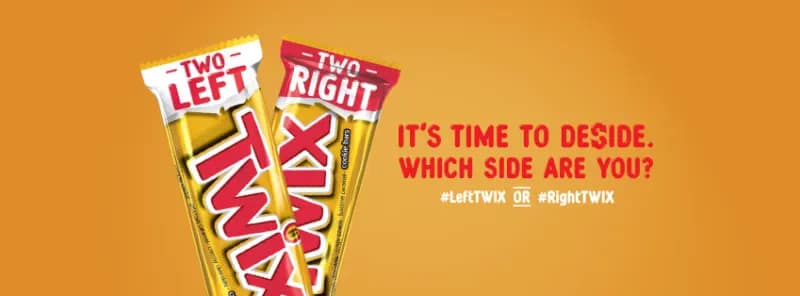
Everyone in the UK knows Twix. Two chocolate fingers in one wrapper — identical at first glance… but apparently not. When the brand decided to split them into Left Twix and Right Twix, nobody expected a harmless joke to evolve into what would become one of the most iconic Twix marketing campaigns of the decade. Instead of shouting about product features, Twix built an entire universe: two rival factories, two stubborn teams and one very simple chocolate bar. It was playful, absurd, brilliantly executed — and it worked. The campaign quickly became a global talking point, proving once again that smart storytelling can breathe new life into a product people think they already know inside out.
What Was the Twix “Left vs Right” Campaign All About?
The idea behind the campaign was beautifully simple:
take one product, pretend it’s actually two… and let the world choose a side.
Twix invented a fictional rivalry between two factories — the Left Twix factory and the Right Twix factory. Each claimed to produce the “proper” version of the bar, even though both were obviously identical. The magic wasn’t in the product but in the story surrounding it.
Mars (the brand behind Twix) leaned into the joke with full confidence. They created:
- dramatic factory backstories,
- overly serious production “differences”,
- mock-historical disputes between Left and Right teams,
- advertising that looked like a documentary about a non-existent rivalry.
The humour was subtle, dry, and very British in tone — which is partly why the campaign resonated so well in the UK and globally.
But underneath the silliness was a clever psychological play:
people love to pick sides.
Whether it’s iPhone vs Android, Pepsi vs Coke, or Tea vs Coffee — humans naturally enjoy choosing a team and defending it.
Twix tapped into that instinct perfectly.
Suddenly, a chocolate bar that everyone had known for decades became a conversation starter again. Fans joked about their preferred side, social media erupted with memes, and the brand enjoyed a huge surge in engagement without changing the product at all.
The campaign wasn’t about flavour, packaging or ingredients.
It was about creating a fun, fictional world that made the most ordinary product feel fresh.
And it worked — spectacularly.

How the “Conflict” Helped Twix Sell More Bars
The “Left vs Right Twix” storyline turned out to be a marketing masterstroke. Instead of pushing traditional product advertising, the brand created a fictional conflict that quickly became a social conversation. People started picking sides, debating, joking… and of course, buying more Twix.
From an advertising point of view, the psychology is straightforward:
division creates emotion, and emotion creates engagement.
Twix leveraged that perfectly. TV spots, billboards and social media posts all fed into one unified narrative universe where you were almost obliged to declare yourself a Left or Right supporter.
The beauty of the idea is that the product never changed — only the context did.
And the results?
A significant uplift in sales across key markets, massive growth in brand visibility and a fresh wave of cultural relevance for a bar that had been around for decades.
The campaign proved that even a long-established product can be reinvented through humour, storytelling and a bit of playful drama. Sometimes, all it takes is looking at yourself from a new angle — or in Twix’s case, from the left… and the right.

The Psychology Behind “Choosing Sides”
At the heart of the Twix campaign lies a simple truth:
people love belonging to a team — even when the “conflict” is completely fictional.
Here’s why the idea worked so well:
- Identity & belonging – humans naturally look for groups to align with. Left vs Right gave people two playful “tribes” to join.
- A sense of competition – harmless rivalry is fun. It feels like supporting a football team or joining an office debate.
- The illusion of choice – even though both bars are identical, choosing a side makes the purchase feel active and personal.
- Perfect fit for social media – memes, comments and polls thrive on simple binary options. Twix handed the internet the perfect format.
- Curiosity and conversation – a fictional conflict makes people wonder “why?”, and that question fuels discussion, sharing and engagement.
In short, Twix didn’t change the product — they changed the context.
And that tapped directly into how people think, behave and interact.
Curious how brands reinvent themselves and stay relevant in a crowded market? Explore our full guide here: What Is Rebranding? A Simple Guide for Small Businesses
What Brands Can Learn From the Twix Campaign
The Twix “Left vs Right” idea might look silly on the surface — but there’s a lot of smart marketing behind it. Here are the key takeaways any brand can apply:
- Storytelling beats features
People remember stories, not specs. Twix didn’t talk about caramel or biscuit ratios — they created a universe. - A fresh angle can revive an old product
Twix had been on shelves for decades. One creative narrative made it feel new again. - Humour builds brand warmth
Playfulness makes brands more likeable. And likeability has a direct impact on purchase intent. - Consistency across channels matters
TV ads, billboards, packaging, social media — all carried the same joke. A united message hits harder. - Let people participate
Asking consumers to “choose a side” turned a passive audience into an active community. - Bold ideas win attention
Safe campaigns blend in. Twix took a risk — and that’s exactly why the world noticed.
Why This Strategy Still Works Today
What makes the Twix campaign so timeless is the fact that its core idea is rooted in human behaviour, not in a specific trend or platform. People still love taking sides, still enjoy harmless debates and still gravitate toward brands that don’t take themselves too seriously. In a world where most advertising fights for attention through louder visuals or bigger budgets, Twix proved that a simple, well-built narrative can cut through the noise just as effectively.
Modern marketing hasn’t changed that much — consumers want to feel involved rather than spoken to. A playful story invites participation, encourages sharing and creates a sense of community around a product that would otherwise be just another option on the shelf. The Left vs Right concept also shows how humour and world-building can give even the most familiar item a surprising amount of depth. When a brand confidently commits to a creative idea, people notice.
And that’s why this strategy still works today: it’s not about the chocolate bar, the visuals or even the rivalry itself. It’s about giving people something fun, simple and emotionally engaging to latch onto — a reason to talk, choose a side and remember the brand long after the ad ends.
Twix Marketing Campaign – A Simple Idea That Changed Everything
Looking back, the success of the Twix campaign feels almost unfair. No flashy rebrand, no revolutionary product update, no dramatic price change — just a clever story about two identical chocolate bars pretending to be different. And yet, that tiny twist reshaped how people talked about Twix, shared it online and even chose it on the shelf.
It’s a reminder that great marketing doesn’t always require complexity. Sometimes the smartest move is to pick a fun angle, push it with confidence and let the audience run with it. Twix did exactly that, and the world rewarded them with buzz, loyalty and years of free conversation.
So whether you’re a big brand or a small business, there’s a lesson here:
if you can turn something ordinary into something worth talking about, you’re already ahead.
Don’t be green about the Twix marketing campaign