
WordPress often gets lumped into the same category as “simple website builders” or associated with cheap templates and messy, over-engineered sites. Because of that, many businesses never really see what it’s capable of. And that’s a shame — because when done properly, WordPress web design is still one of the strongest business tools online. It’s fast, flexible, scalable and genuinely SEO-friendly.
The real issue isn’t WordPress itself. It’s how it’s used. Most websites are built without a clear strategy: a random theme, too many plugins and very little thought about what the site is actually supposed to achieve. The result? The website exists, but it doesn’t work. Businesses end up with something that looks “fine” on the surface, yet brings no real value underneath.
In this article, we’ll look at where the real advantage of WordPress web design lies, why so few companies take full advantage of it, and what separates a website that simply sits online from one that actively supports a business.
Why WordPress Web Design Still Gives Businesses a Real Advantage
WordPress web design isn’t an advantage by default. The advantage comes from using it properly, as a business tool rather than just a way to “have a website”. Most companies stop at the basics: the site loads, the pages are there, and everything looks fine on the surface. And that’s exactly where the advantage disappears — because everyone else is doing the same thing.
A well-designed WordPress website can do far more than simply exist online. It can support sales, clarify your message, guide users towards action and quietly work in the background to improve your visibility in Google. WordPress makes this possible because it’s flexible by nature. You can start with a simple business website and gradually build on it with landing pages, content, SEO or even ecommerce — without rebuilding everything from scratch.
Another key advantage is freedom. WordPress doesn’t lock businesses into a single structure or platform rulebook. If something isn’t working, it can be improved. If the business grows, the website can grow with it. This ability to adapt is what separates WordPress from many closed website builders that look good on day one but quickly become limiting.
The biggest mistake businesses make is treating WordPress as a finished solution instead of a foundation. When it’s approached strategically, WordPress web design becomes an asset — not just a design choice — and that’s where the real advantage still lies.
WordPress Flexibility – What Website Builders Simply Can’t Offer
Website builders are great at one thing: getting something online quickly. And for some businesses, that’s enough. The problem starts when a website needs to do more than just exist. This is where WordPress flexibility becomes a real advantage.
With WordPress web design, you’re not locked into a fixed structure or a predefined way of doing things. Pages, layouts, content sections and functionality can be adapted as the business evolves. Want dedicated landing pages for campaigns? Better SEO structure? A blog that actually supports growth? All of that can be built and refined without switching platforms or starting from scratch.
Most website builders operate within closed systems. They decide how your site is structured, what you can customise and where the limits are. At first, that simplicity feels helpful. Over time, it often becomes restrictive. When performance, SEO or conversion improvements are needed, businesses quickly hit a ceiling.
WordPress works differently. It’s built to be extended, adjusted and improved. A website can start simple and gradually become more sophisticated — without losing control or flexibility along the way. That’s why businesses that think long-term tend to outgrow builders, while WordPress grows with them.
SEO, Speed and Scalability – The Real Strength of WordPress Websites
One of the biggest reasons WordPress continues to outperform website builders in the long run is the level of control it offers over SEO and performance. This isn’t about installing a single SEO plugin and hoping for the best. It’s about having the ability to shape the structure of the website, the content hierarchy and the technical foundations that search engines actually care about.
When it comes to speed, WordPress is often underestimated. A well-built WordPress website can be extremely lightweight and fast — especially when it’s based on a clean theme, sensible design choices and minimal plugins. Faster load times mean better user experience, stronger Core Web Vitals scores and fewer visitors leaving before the page has even loaded.
Scalability is where WordPress really shows its strength. Businesses rarely stay the same size for long, and websites shouldn’t either. With WordPress, it’s possible to add new pages, sections, landing pages, blog content or even ecommerce features without rebuilding the entire site. The website evolves alongside the business, rather than becoming a technical bottleneck.
This combination of SEO control, performance and scalability is what turns WordPress web design into a long-term asset. Not a short-term solution, and not something that needs replacing every couple of years — but a platform that continues to support growth as the business moves forward.
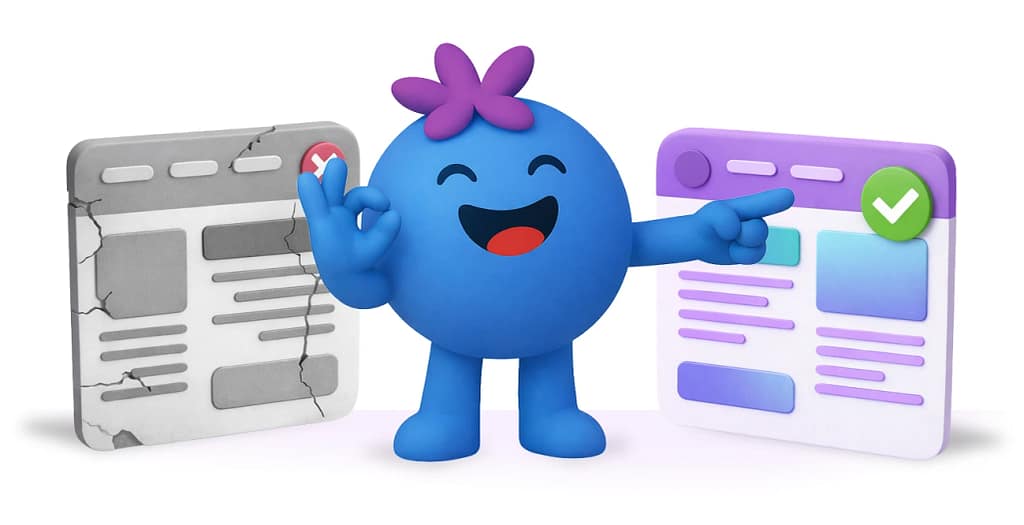
WordPress vs Website Builders – A Quick Comparison
How Many Websites Use WordPress (and What That Means in the UK)
WordPress is not just popular — it’s dominant. According to data published by W3Techs, the leading authority on web technology usage statistics, WordPress powers over 43% of all websites worldwide, which means nearly half of the entire internet runs on a single platform. No other CMS or website builder comes even close to that level of adoption.
When we look specifically at websites using a recognised content management system, WordPress’s position becomes even stronger. It accounts for around 60% of the global CMS market share, outperforming all other systems combined. This isn’t a trend or a short-term spike — these numbers have been stable and growing for years.
The UK market follows the same pattern. WordPress is widely used across British businesses, organisations and online projects of all sizes. From small local companies to large content-driven platforms, WordPress has become the default choice for websites that need flexibility, SEO performance and long-term scalability.
What this really means for businesses is simple: WordPress web design isn’t a niche or experimental option. It’s a proven, industry-standard foundation backed by real-world usage at massive scale. And that scale translates directly into better tooling, stronger community support and far more room to grow than most closed website builders can offer.
Summary
WordPress web design isn’t about choosing a popular platform — it’s about how that platform is used. When approached strategically, WordPress becomes a flexible, scalable and SEO-friendly foundation that can genuinely support business growth. The advantage doesn’t come from the system itself, but from treating the website as a long-term asset rather than a one-off project.
Most businesses don’t lose out because they picked the “wrong” platform. They lose out because their website was built without a clear purpose. A website that simply exists online will always underperform compared to one designed to guide users, support visibility in Google and adapt as the business evolves. That’s where WordPress still gives an edge — and why so few businesses truly use it to its full potential.
If you’re planning a website that should do more than just look good, take a look at how we approach professional WordPress web design for UK businesses — with performance, SEO and long-term growth in mind.
Don’t be green about WordPress web design